
Dota 2 Positions Explained: All 5 Roles & Which Climbs Fastest
 Yasir Rehman
15 September 2026 · 10 min read
Yasir Rehman
15 September 2026 · 10 min read
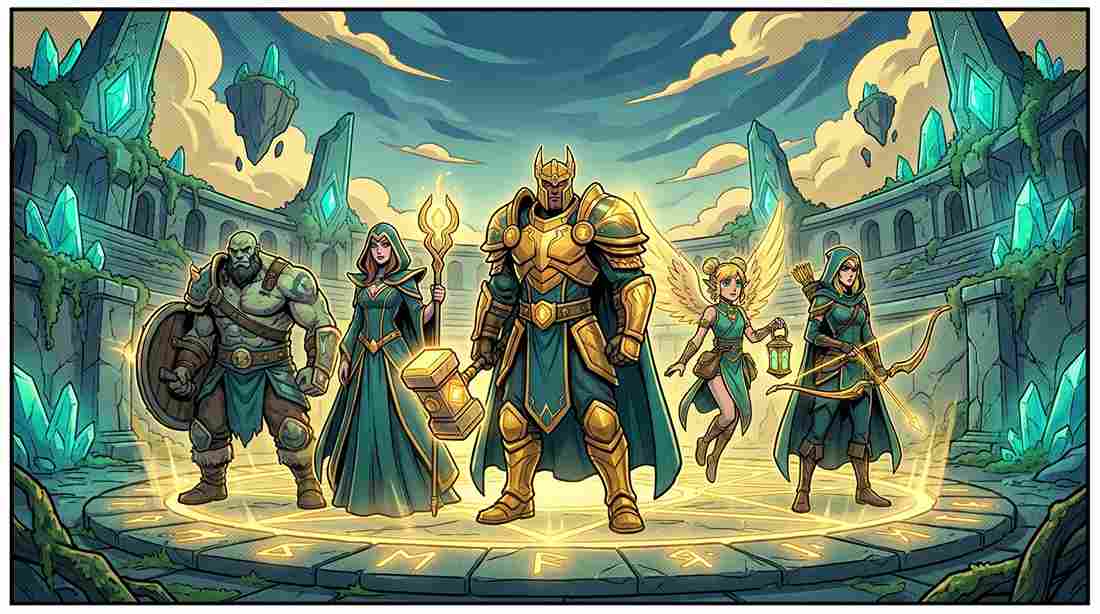
Dota 2 has five positions, numbered 1 to 5, and the number is really just a farm priority ranking: Position 1 gets the most gold, Position 5 gets the least. That is the whole idea in one sentence. Position 1 is the hard carry, 2 is mid, 3 is the offlaner, 4 is the soft support, and 5 is the hard support. If you are new and the number soup is confusing, do not worry; I remember staring at "pos 4" in chat with no clue what my teammate wanted from me. Let me break down what each role actually does, how they differ, and the question you really came here for: which one climbs the fastest.
Stuck in a bracket where every game feels decided by whichever teammates you get? Dota 2 MMR boosting gets a verified high-rank booster on your account to climb you out on the exact solo-queue heroes that win without a team, so you land at the rank your skill actually deserves instead of grinding against the coin flip.
What "positions" actually mean in Dota 2
The position number tells you how much of your team's resources you get, and resources in Dota mean gold and experience. There is only so much farm on the map, so the team silently agrees on who eats first. Your Position 1 gets the safest farm and the most of it, because the plan is for them to become the late-game monster. Everyone else takes less so the carry can get there. By the time you reach Position 5, you are barely farming at all and instead spending your time keeping everyone else alive.
Once that clicked for me, the whole game made more sense. You are not five random players doing your own thing. You are a resource pyramid, and each position is a job in that pyramid.
All 5 Dota 2 positions explained
Position 1: the Hard Carry
The carry is weak early and terrifying late, and the entire game plan is built around getting them there. You farm the safelane, avoid dying, stack up items, and then take over the game in the late stages. The trade-off is patience: for the first 15 minutes you often feel useless, and you have to trust the process. When it works, you become the hero who wins the fight single-handedly. Heroes like Juggernaut, Faceless Void, and Phantom Assassin live here.
Position 2: the Midlaner
Mid is the solo lane in the middle, and it is the role with the most early individual power. You get the second-most farm, you control the runes, and because you are alone in your lane, you level up fast and hit your power spikes early. Good mids do not just sit in lane; they roam and snowball the other lanes with kills. It is the flashiest, highest-tempo role, and also one of the most mechanically demanding. Storm Spirit, Invoker, and Ember Spirit are classic mids.
Position 3: the Offlaner
The offlaner plays the hard lane, and their job is to create space, not to farm comfortably. You are usually a tanky, durable hero who can survive a rough lane, soak pressure, and then start fights. Offlaners are the initiators, the ones who jump in first and force the action. It is a role about impact over gold, and it suits players who like being in the middle of every fight. Think Axe, Mars, or Centaur.
Position 4: the Soft Support
The soft support is the aggressive playmaker who roams the map hunting for early kills. You get a little more farm than the hard support, and you spend it on mobility and kill items rather than just wards. A good pos 4 is everywhere: ganking mid, setting up the offlaner, securing runes, making the early game chaos work in your team's favor. It is my favorite role to climb on, honestly, because you create kills instead of waiting for them. Spirit Breaker, Tusk, and Earth Spirit shine here.
Position 5: the Hard Support
The hard support has the least farm and the biggest sacrifice, and a good one is the reason the carry ever gets going. You babysit the safelane carry early, buy the wards and consumables, and constantly give up your own gold and safety for the team. Later you become the utility hero with game-changing spells. It is the least glamorous role and the most selfless, and a great pos 5 is worth their weight in gold to a team. Heroes like Lion, Jakiro, and Shadow Shaman fit the role.
Pos 4 vs Pos 5: what is the actual difference?
Both are supports, but pos 4 plays aggressively and roams, while pos 5 plays protectively and babysits. This is the single most confusing thing for new players, so here is the clean version. Your pos 4 gets slightly more farm, roams the map, and looks for kills. Your pos 5 stays with the carry, keeps the lane safe, and buys most of the team's vision. Same "support" label, opposite personalities. If someone calls "4," they want the aggressive roamer. If they call "5," they want the selfless babysitter.
Which lane does each position play?
The positions pair up into lanes, and knowing the pairing tells you where to walk at the start of the game.
| Lane | Who plays there | Why |
|---|---|---|
| Safelane | Position 1 + Position 5 | The carry farms safely while the hard support protects them |
| Mid lane | Position 2 | Solo, for fast levels and rune control |
| Offlane | Position 3 + Position 4 | The offlaner soaks the hard lane while the soft support helps early, then roams |
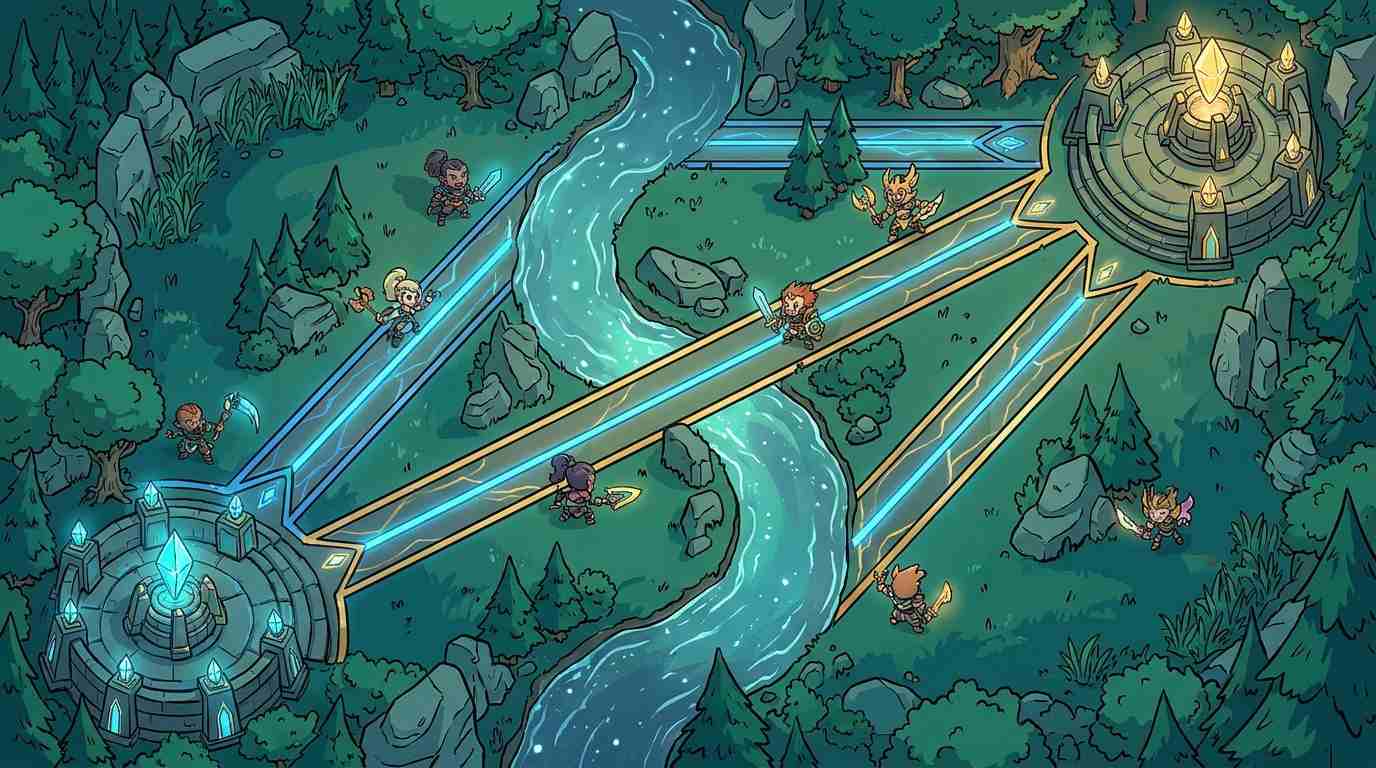
Farm priority runs straight down the numbers: 1 eats first, then 2, then 3, then 4, and 5 last. Keep that in your head and you will stop accidentally stealing your carry's farm, which, trust me, your carry will thank you for.
Which position climbs fastest?
The role that climbs fastest is the one that relies least on your teammates, because in solo queue your teammates are the variable you cannot control. That is the principle every high-MMR player eventually lands on, and it reframes the whole question. You are not looking for the "strongest" role; you are looking for the role where your own skill decides the most games.
Here is my honest breakdown of how the roles stack up for solo climbing:
| Position | Climb speed | Why |
|---|---|---|
| Mid (2) | Fastest for skilled players | Most early individual power, farm priority, and roam pressure. You dictate tempo. |
| Soft support (4) | Fast and underrated | You create kills on your own instead of waiting for the carry. Low contest, high agency. |
| Carry (1) | Fast if you can close | Huge late-game upside, but you depend on surviving a lane you don't fully control. |
| Offlane (3) | Steady | Consistent impact through initiation, but harder to hard-carry a lost game. |
| Hard support (5) | Slowest | Most team-dependent. A great pos 5 still climbs, but your impact routes through others. |
If I had to give one answer: play mid if you are mechanically confident, and an aggressive pos 4 if you are not. Both put your fate in your own hands. The one trap to avoid is the passive pos 5 who just buys wards, stands behind the carry, and dies first in every fight. That version of support has roughly the same win rate as a coin flip, because its entire impact depends on teammates you cannot control. If you play support, play the kind that takes over games, not the kind that watches them happen.
One more honest truth: at lower brackets, the skill gap between players is huge, so a single player who plays well genuinely can carry most of their games. Pick a role with high personal agency, spam two or three heroes on it, and you will climb. If you want to know exactly what you are climbing toward, our guide to how the Dota 2 ranks and MMR work lays out every medal.
Which role should a beginner start with?
If you are brand new, start on Position 1 to learn the fundamentals without the pressure of running the whole map. The safelane gives you time and space to practice the hardest core skill in Dota, last-hitting, without three lanes of chaos landing on you at once. You learn farming, itemization, and positioning at your own pace. Once that feels natural, branch out.
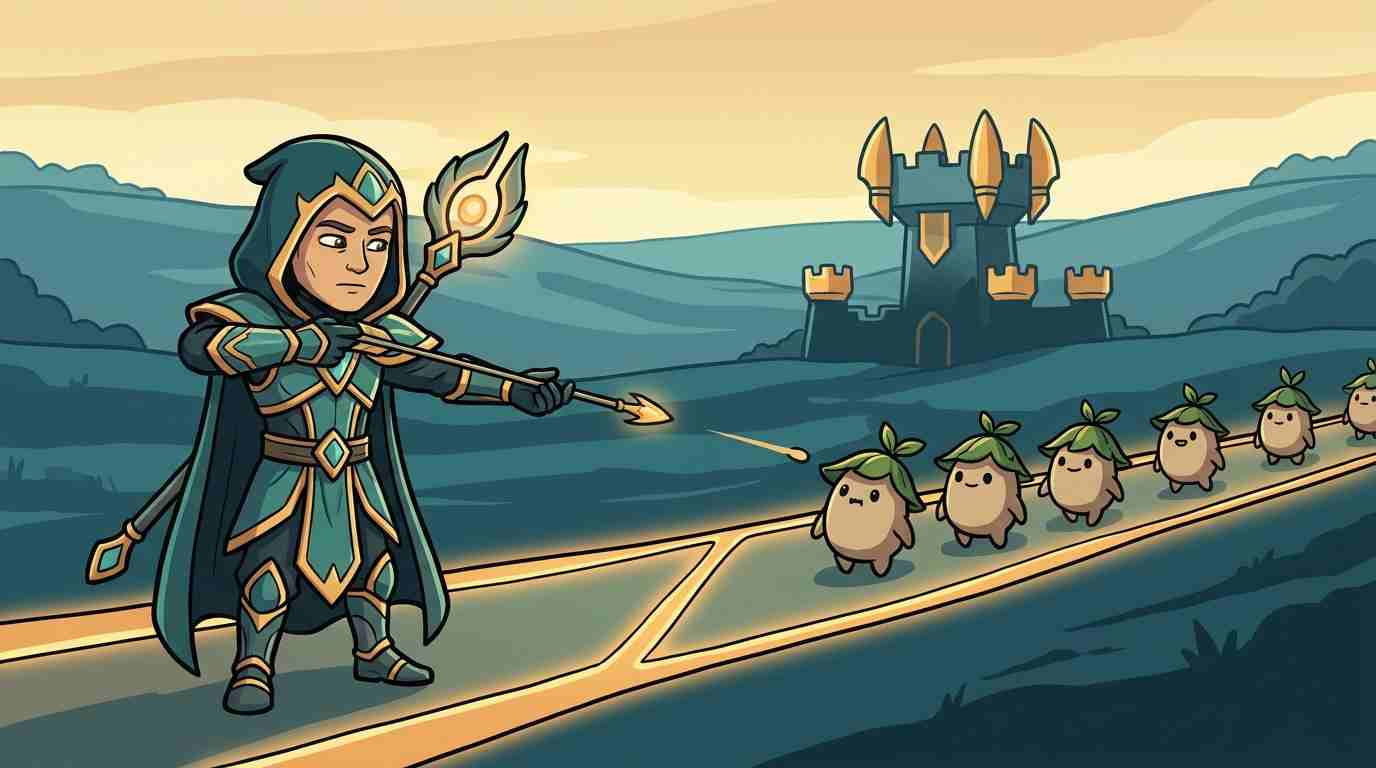
The role I would not start on is mid, even though it is tempting. Mid gets targeted constantly and punishes mistakes hard, so it is a rough place to learn. And if you genuinely enjoy enabling your team, pos 5 is a fine start too; just know it is more about game knowledge than raw mechanics. Whatever you pick, stick with it long enough to actually get good before you role-swap every game.
The bottom line
The five positions are just a farm-priority pyramid: carry, mid, offlane, soft support, hard support, from most gold to least. Learn what each one owes the team and the whole game stops feeling random. And when you want to climb, forget "strongest" and pick the role where your own play decides the most games, which for most people means mid or an aggressive pos 4. Pick one, learn a small hero pool, and let your own skill do the carrying. That is how you actually move up.
For more guides and honest breakdowns like this, check out our latest gaming guides and updates.
FAQ
What are the 5 positions in Dota 2?
Position 1 is the hard carry, Position 2 is the midlaner, Position 3 is the offlaner, Position 4 is the soft support, and Position 5 is the hard support. The number is a farm priority ranking, with 1 getting the most gold and 5 the least.
What is the difference between pos 4 and pos 5 in Dota 2?
Both are supports, but pos 4 is the aggressive roamer who looks for early kills and gets slightly more farm, while pos 5 is the protective hard support who babysits the carry and buys most of the team's wards.
Which Dota 2 position climbs the fastest?
The role that relies least on teammates. For mechanically confident players, that is mid, and for everyone else, an aggressive pos 4 that creates its own kills. Passive hard support climbs the slowest because its impact depends on others.
Which position is best for beginners in Dota 2?
Position 1, the safelane carry. It gives you time and space to learn last-hitting, itemization, and positioning without the pressure of controlling the whole map, which makes it the best place to build fundamentals.
Which lane does each position play?
The safe lane is Position 1 with Position 5; the mid lane is the solo Position 2, and the offlane is Position 3 with Position 4 helping early before roaming.
What position gets the most farm in Dota 2?
Position 1, the hard carry. Farm priority runs down the numbers in order, so the carry eats first and the hard support last, all so the carry can become the late-game win condition.
Is support a bad role for climbing?
No, but only if you play it aggressively. Kill-creating supports climb well because they take games into their own hands. The passive ward-buying, carry-babysitting style is what climbs slowly, since its impact routes through teammates you cannot control.